Evidence suggests:
-
Potential improvement in lipid profile markers
-
Support for healthy blood pressure and cardiovascular function in some models
-
May assist in metabolic health outcomes
$75.00
In stock
| Quantity | Discount (%) | Price |
|---|---|---|
| 1 | — | $75.00 |
| 2 | 41.33 % | $44.00 |
| 5 | 42.67 % | $43.00 |
| 8+ | 46.67 % | $40.00 |
Free bacteriostatic water with every order.
Use our Research Peptide Storage Guide — Laboratory Use Only — to ensure proper handling and stability for controlled experimental applications. Not for human consumption, therapeutic, or diagnostic use.
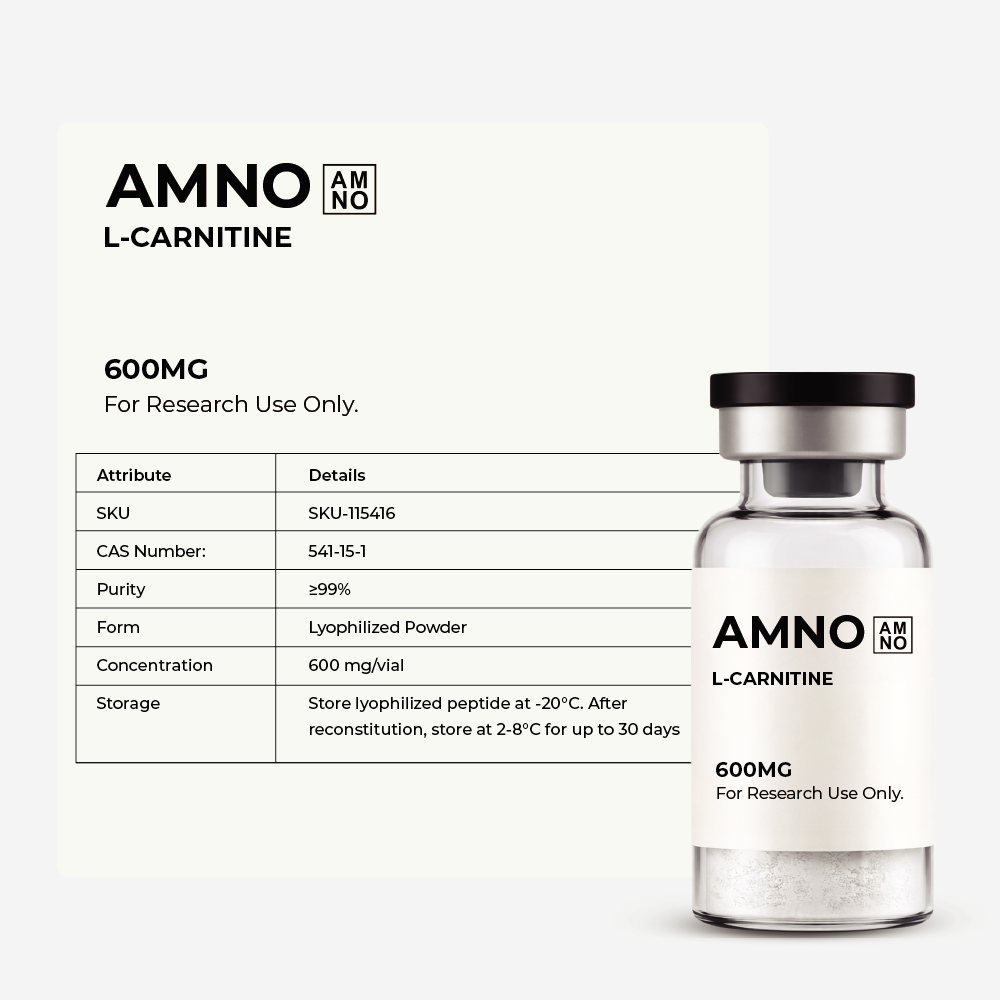
Chemical Name: L-Carnitine (levocarnitine)
Chemical Formula: C₇H₁₅NO₃
Molecular Weight: 161.20 g/mol
CAS Number: 541-15-1
Structure: Quaternary ammonium compound naturally synthesized from lysine and methionine and essential for fatty acid transport
Form: Fine white crystalline powder
Solubility: Highly soluble in water (hydrophilic)
Stability: Stable under normal storage; hygroscopic
Half-Life: ~4–16 hours depending on route and dose (research dependent)
Storage: Store in a cool, dry place; protect from moisture and direct sunlight
Transports long-chain fatty acids into mitochondria for beta-oxidation
Enhances cellular ATP generation through improved substrate utilization
Supports the body’s ability to shift between carbohydrate and fat metabolism
Helps regulate toxic acyl-CoA accumulation within cells
Studied for increased lipid oxidation and energy expenditure
Explored for reduced muscle fatigue and improved recovery markers
Examined for influence on cardiovascular efficiency and metabolic health indicators
Studies indicate:
Enhanced fatty acid oxidation and energy expenditure in metabolic models
Improved utilization of fat stores during exercise
Potential assistance with weight and body composition goals
Research shows:
Increased endurance and time to fatigue
Reduced markers of muscle damage post-exercise
Improved muscle oxygen utilization
Evidence suggests:
Potential improvement in lipid profile markers
Support for healthy blood pressure and cardiovascular function in some models
May assist in metabolic health outcomes
Some studies reveal:
Potential benefits for cognitive function in aging models
Support for neuronal energy metabolism
Protective effects against oxidative stress
L-Carnitine is recognized as safe in a wide range of doses in research contexts.
Gastrointestinal discomfort (nausea, cramps, diarrhea), Temporary fish-like body odor in higher doses, rare headaches or agitation
May interact with thyroid hormone regulation in sensitive individuals, caution in renal impairment
Studies show good safety, but monitoring kidney and metabolic markers is recommended in long-term protocols
Oral dosing individualized based on research design.
Independent laboratory testing confirms purity and composition
Purity
Batch
Date