$55.00
In stock
| Quantity | Discount (%) | Price |
|---|---|---|
| 1 | — | $55.00 |
| 3 | — | $70.00 |
| 6 | — | $65.00 |
| 12+ | — | $60.00 |
Free bacteriostatic water with every order.
Use our Research Peptide Storage Guide — Laboratory Use Only — to ensure proper handling and stability for controlled experimental applications. Not for human consumption, therapeutic, or diagnostic use.
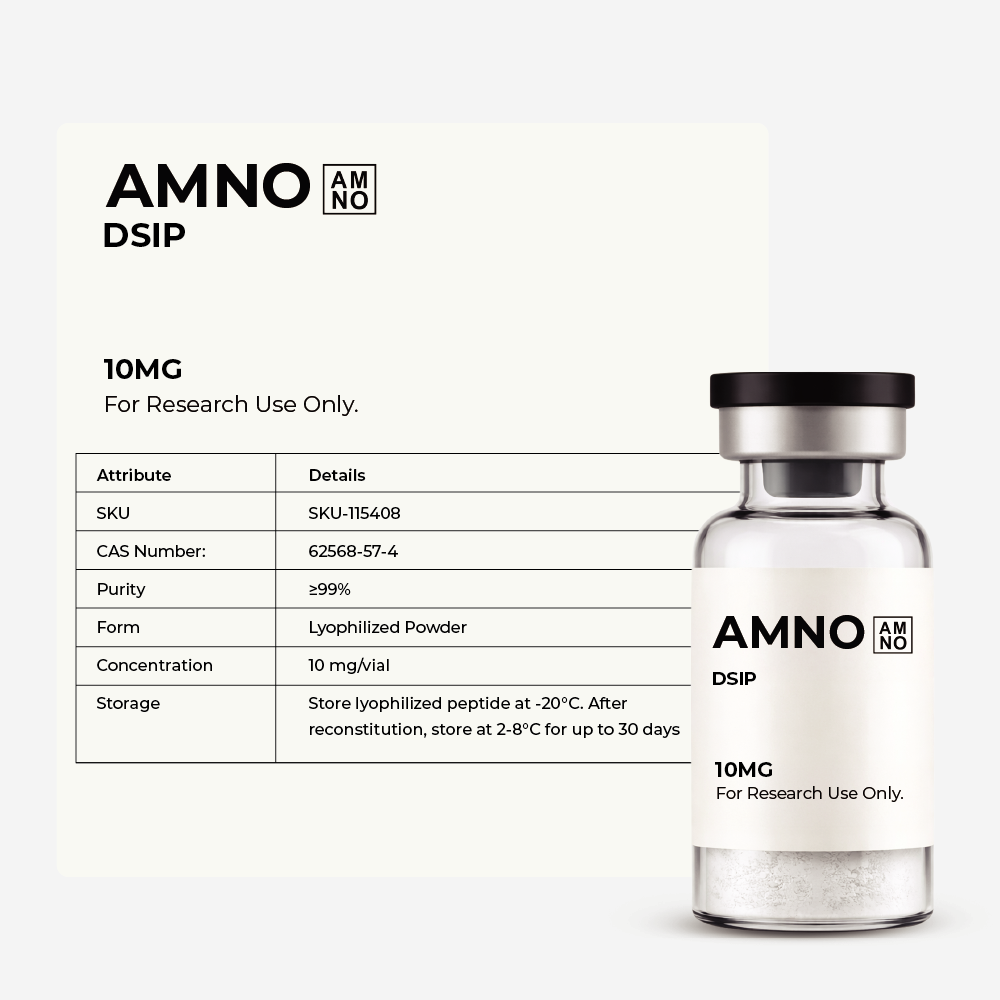
Chemical Formula: C₁₅₂H₂₅₂N₄₄O₄₂
Molecular Weight: ~3,368 g/mol
CAS Number: 446036-97-1
Structure: 29–amino acid peptide with four strategic amino acid substitutions to enhance stability and biological activity
Form: Lyophilized powder
Solubility: Soluble in water and aqueous solutions
Half-Life: Approximately 15–30 minutes (reported in research models)
Storage: Store refrigerated at 36–46 °F (2–8 °C); protect from light and moisture
Modulates sleep cycles and supports deeper restorative sleep phases
Influences hypothalamic signaling pathways involved in stress and hormone regulation
Supports balance of cortisol and stress-related neurotransmitter activity
Assists in stabilizing biological rhythms and sleep-wake cycle synchronization
Studied for enhancing slow-wave sleep and reducing sleep fragmentation
Investigated for reducing stress-induced neuroendocrine dysregulation in research models
Explored for effects on growth hormone release and adrenal signaling modulation
Evaluated for potential protective effects on neuronal function and central nervous system stability
Supports increased slow-wave (deep) sleep duration
Improves overall sleep architecture stability
Helps regulate disrupted sleep cycles
Promotes restorative sleep patterns
Assists in synchronizing biological clock signaling
Supports normalized melatonin rhythm patterns
Helps stabilize irregular sleep-wake cycles
Promotes consistent circadian timing
May help regulate cortisol levels in research models
Supports balanced neuroendocrine signaling
Enhances resilience to physiological stress
Modulates stress-related hormone pathways
Demonstrates protective effects in neural tissue models
Supports neurotransmitter balance
Reduces markers of oxidative stress in research settings
Promotes healthy neural signaling activity
Research observations generally report few to no significant side effects in controlled settings.
Experimental studies have not demonstrated toxic effects, even at higher research doses.
Occasional mild irritation or temporary redness at administration sites may occur.
Demonstrates favorable systemic tolerability across multiple research models.
These effects appear to be dose-dependent and generally resolve after the peptide’s active period.
Independent laboratory testing confirms purity and composition
Purity
Batch
Date